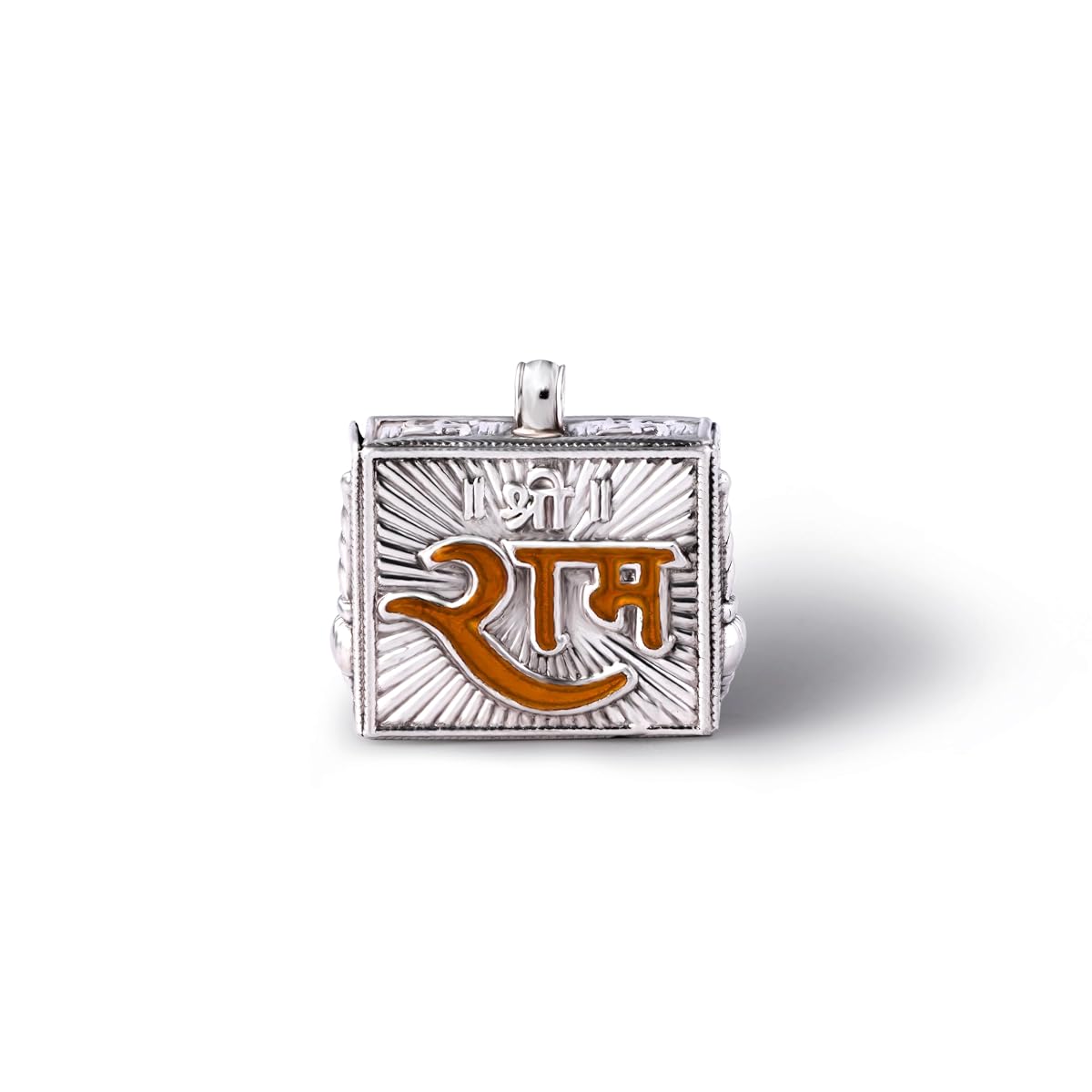
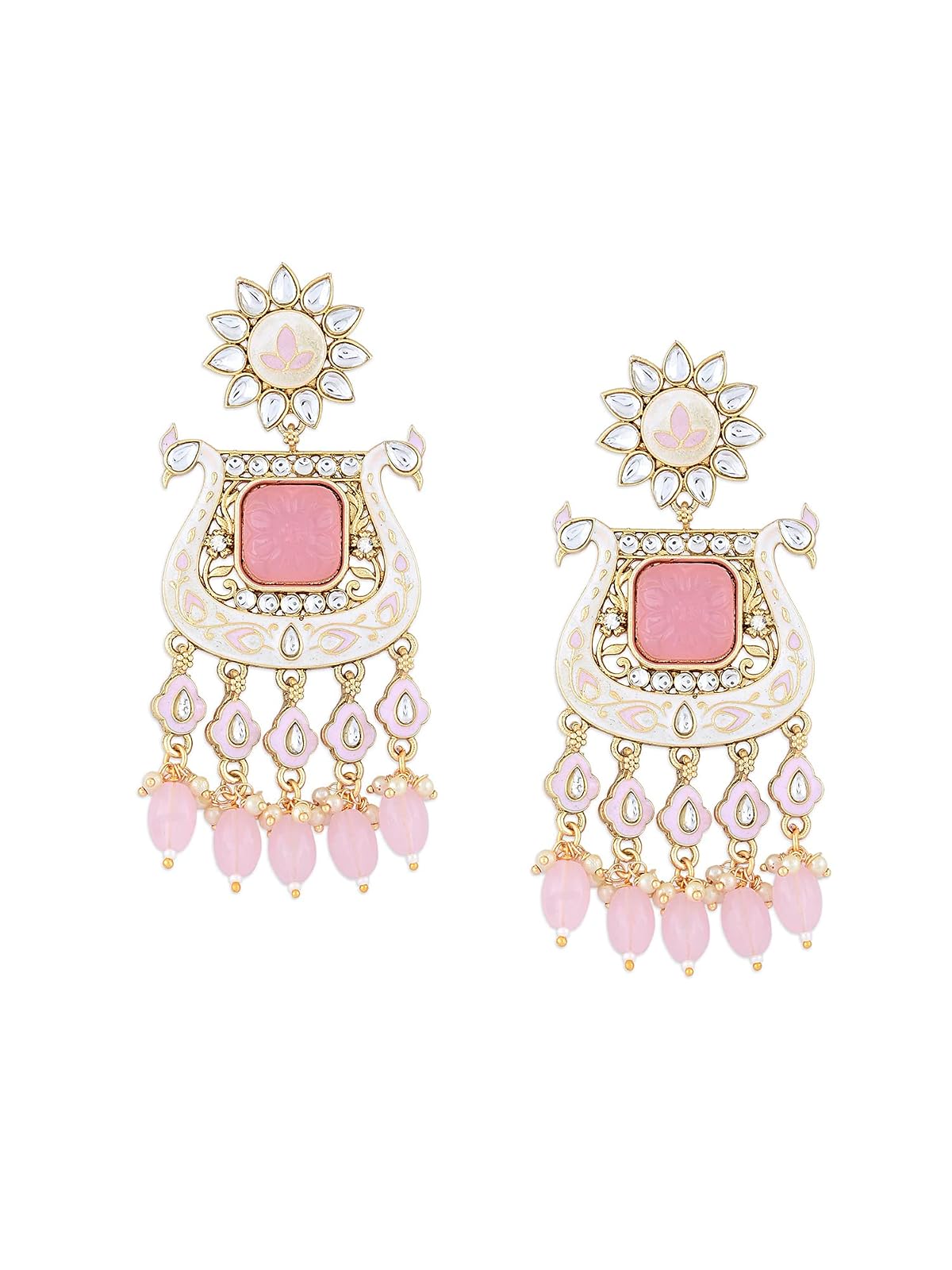
Meenakari is enamel fused onto metal by fire, not paint applied to it. Coloured mineral and glass powders are packed into engraved recesses and fired until they melt into a hard glassy surface level with the metal edges around them.
Jaipur is the centre of the craft, and it arrived there deliberately. Raja Man Singh brought enamellers from Lahore to Amber in the late sixteenth century, and the tradition has stayed in a small number of families since. The classical palette is a deep red, a green and a white on gold, because those colours were the ones that survived firing reliably. Blue and turquoise work is more associated with Persian influence and later pieces.
The process is why it costs what it does. The metal is engraved to create walled compartments, each colour is filled and fired separately because different colours fuse at different temperatures, and the piece goes back into the kiln once for each. The highest-firing colour goes first, the lowest last, so a five-colour piece is five firings, and a mistake at the fourth ruins the first three.
Distinguishing real enamel from painted imitation takes a fingernail. Fired enamel is glass: hard, cool to the touch, glossy without a coating, and level with the metal walls around it. Painted or resin-filled imitation sits slightly proud or slightly sunken, feels warmer, and can be marked with a fingernail or scratched with a pin at the edge. Under a loupe, real meenakari sometimes shows tiny bubbles frozen in the surface from firing, which are a sign of authenticity rather than a flaw.
Because it is glass, it chips. A meenakari piece that is dropped onto a hard floor can lose a section of colour, and it cannot be touched in at home. Keep it away from impact, never use an ultrasonic cleaner, and clean with a dry or barely damp soft cloth. Store it separately so harder pieces cannot knock against it.
In practice most of what is sold as meenakari at accessible prices is enamel on gold-plated brass, often combined with kundan setting on the same piece, which is the traditional pairing: meena on one face, stones on the other, so the jewellery is finished on both sides. That double-sided finishing is itself a signal of the tradition, since the back was meant to be as beautiful as the front.
Questions people ask
- How do I tell real meenakari from painted imitation?
- Fired enamel is glass: hard, cool, glossy without any coating, and level with the metal walls around it. Paint or resin sits proud or sunken, feels warmer, and marks with a fingernail. Tiny bubbles visible under magnification are a sign of genuine firing.
- Why is meenakari expensive?
- Each colour is fired separately because different colours melt at different temperatures, so a five-colour piece goes through the kiln five times, highest-firing colour first. A mistake late in the sequence ruins everything done before it.
- Can chipped enamel be repaired?
- Not at home, and rarely economically. Enamel is glass fused to metal, so a chip means refiring by someone with the craft. Treat it as something to protect from impact rather than something to fix.
- Is meenakari the same as kundan?
- No, and they are often on the same piece. Meenakari is the fired enamel colour work. Kundan is the technique of setting stones with gold foil. Traditionally the stones face out and the enamel decorates the reverse, so the jewellery is finished on both sides.